
Using scientific computing on mechanics and sociology.
I work across computational mechanics, scientific computing and computational sociology, using numerical methods, high-performance computing and artificial intelligence to understand complex physical and societal systems—and to turn that understanding into better models, better policies and better decisions.
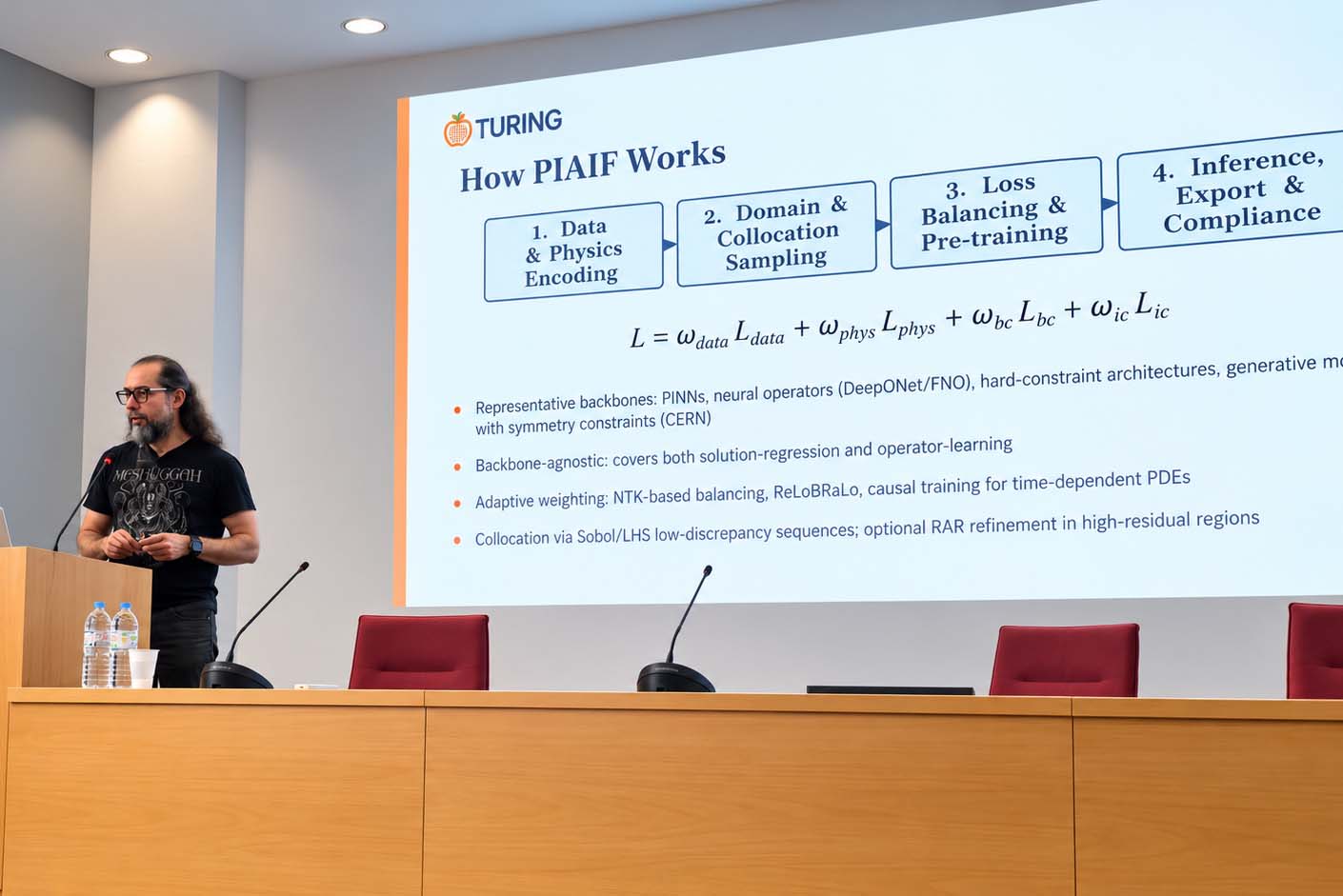
Computational intelligence for physical and societal systems
My research lies at the intersection of computational science, artificial intelligence and complex systems.
I work across two domains that may initially appear very different: the simulation of complex physical systems and the computational analysis of complex societal systems.
In computational mechanics, my research focuses on high-performance numerical methods, domain decomposition, iterative solvers, reduced-order modelling and machine learning for scientific computation.
In computational sociology, my work increasingly examines how large language models, data and computational methodologies can support the understanding of social systems and the formulation of public and regional policy.
The underlying research question is remarkably similar in both cases:
How can computation help us understand a complex system, explore alternative futures and make better decisions?
Two domains, one computational perspective.
Engineering structures, regional economies and societies are obviously different systems.
But computationally, they share important characteristics.
They involve:
- large numbers of interacting variables;
- incomplete information;
- uncertainty;
- multiple possible outcomes;
- nonlinear interactions;
- competing constraints;
- and decisions whose consequences may propagate throughout the system.
My research therefore approaches computation not simply as a means of calculating an answer, but as a method for exploring complex systems.
In physical systems, this may mean solving millions of coupled equations. In societal systems, it may mean synthesizing heterogeneous evidence, stakeholder perspectives and competing policy scenarios.
Artificial intelligence increasingly provides a bridge between these worlds.
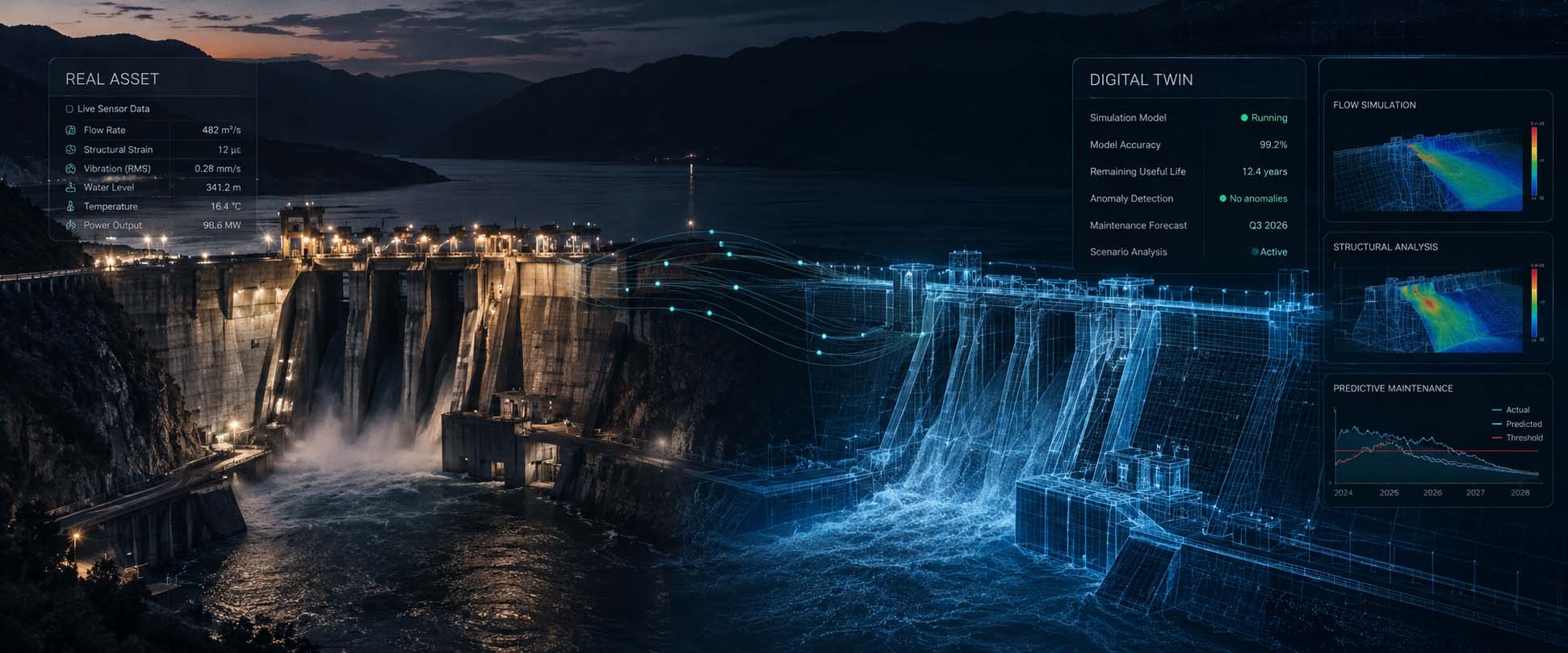
Computational mechanics
A major part of my research background lies in computational mechanics and high-performance scientific computing, particularly the numerical solution of large-scale problems derived from partial differential equations.
My work and research interests include:
- Finite Element Methods;
- Domain Decomposition Methods;
- Finite Element Tearing and Interconnecting — FETI;
- Balancing Domain Decomposition;
- BDDC and related techniques;
- Krylov iterative methods;
- preconditioning;
- multiple-right-hand-side systems;
- stochastic computational mechanics;
- reduced-order modelling;
- and parallel numerical algorithms.
These methods become essential when realistic engineering models generate extremely large computational systems or when the same physical model must be evaluated repeatedly under changing conditions.
A central theme of my current research is therefore not simply:
How can we solve one large problem efficiently?
but:
How can what we learn while solving one problem help us solve the next one?
From Numerical to Learning Solvers
Engineering analyses frequently involve families of related problems.
They appear in:
- stochastic simulation;
- optimization;
- uncertainty quantification;
- sensitivity analysis;
- parameter studies;
- multiple loading conditions;
- model updating;
- and digital twins.
Traditional numerical algorithms often treat each member of such a family as an independent computational task. Much of the information discovered during the previous solution is consequently discarded. I am interested in computational methods that retain this information. Search directions, Krylov spaces, eigenvectors, reduced bases, convergence patterns and characteristic solution components can all potentially become forms of reusable computational knowledge.
The objective is to develop numerical systems capable of recognizing similarity between problems and exploiting previous computations to accelerate future ones.These techniques become particularly important when simulations contain millions of degrees of freedom, repeated analyses or large families of related computational problems. Through my work with MGroup at the National Technical University of Athens and NComp, I explore how advanced numerical methods can become the computational foundation of next-generation engineering tools.
Machine learning for computational mechanics
Machine learning introduces a new dimension to this problem.
Rather than replacing established numerical solvers with purely data-driven approximations, I am particularly interested in hybrid architectures combining machine learning with numerical analysis and physical modelling.
Potential applications include learning:
- effective reduced spaces;
- preconditioning strategies;
- optimal solver configurations;
- relationships between parameters and solver behaviour;
- characteristic response patterns;
- useful information from previous Krylov spaces;
- efficient domain-decomposition strategies;
- and representations transferable between related simulations.
The numerical solver provides mathematical and physical consistency. Machine learning provides adaptation, pattern recognition and accumulated computational experience. The combination has the potential to produce simulation algorithms that improve as they solve increasingly large families of related problems.
Physics-Aware Artificial Intelligence
Scientific AI differs fundamentally from many conventional applications of machine learning. In engineering, the governing physics is often already known. Data may be expensive to obtain. Extrapolation matters. And an apparently plausible result may still violate fundamental physical constraints. I am therefore interested in computational architectures combining:
physics + numerical algorithms + data + artificial intelligence
rather than attempting to replace one with another.
My research interests include:
- physics-aware machine learning;
- operator learning;
- learned preconditioners;
- AI-assisted numerical algorithms;
- model reduction;
- latent representations of physical systems;
- transfer learning between simulations;
- machine-learning-assisted domain decomposition;
- and scientific foundation models.
The ultimate goal is not simply faster approximation. It is the development of computational systems capable of learning how to solve physical problems more effectively.
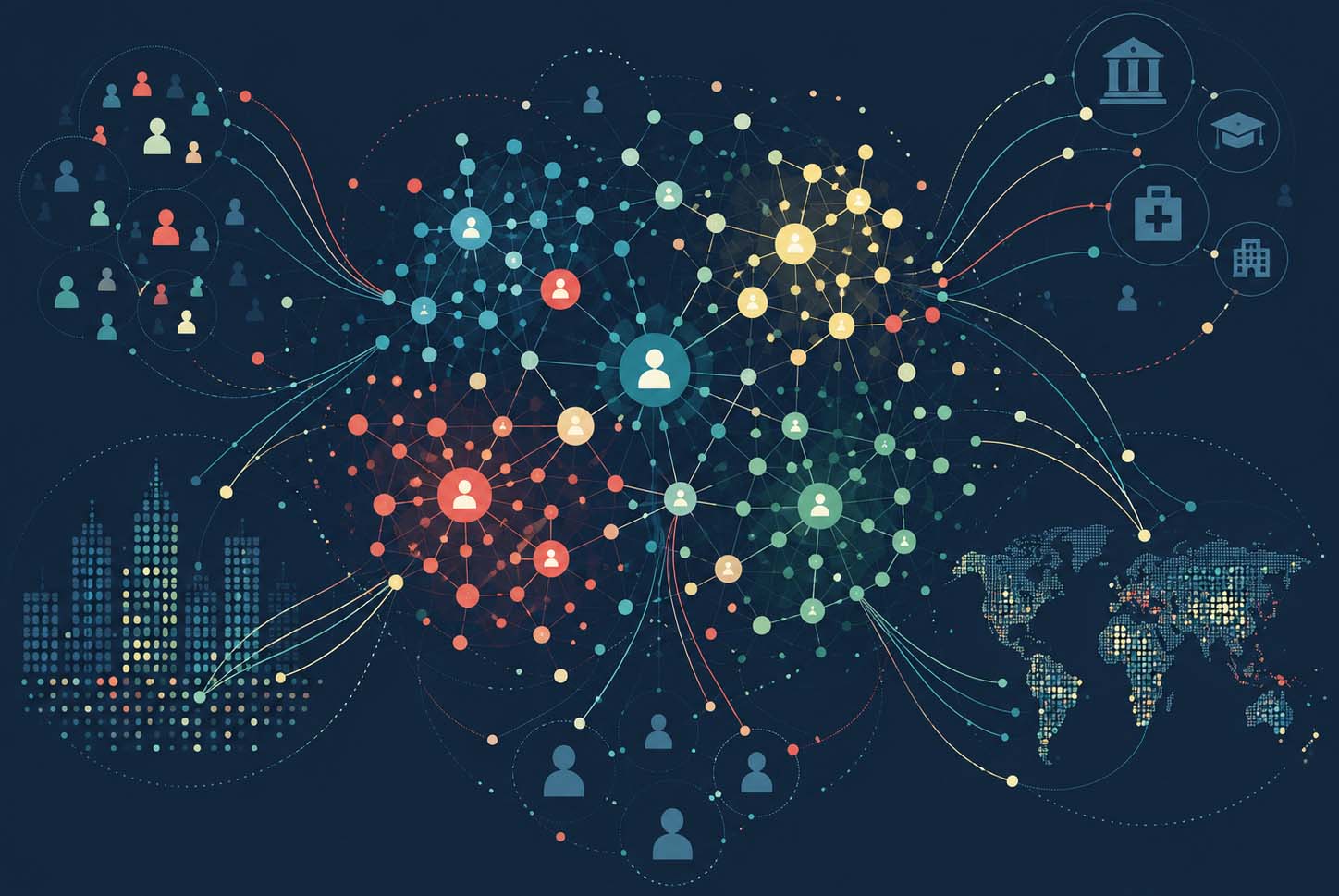
Computational sociology and complex societal systems
My research interests also extend beyond physical simulation into computational sociology and the analysis of complex societal systems.
I am part of STIS at the National and Kapodistrian University of Athens (NKUA), where my work connects artificial intelligence and computational methodologies with questions involving society, regional development and public policy.
Social systems present a fundamentally different computational challenge from engineering systems. Their behaviour cannot normally be described through a single set of deterministic governing equations. Instead, they emerge from interactions between:
- individuals;
- communities;
- institutions;
- economic conditions;
- geography;
- regulation;
- environmental pressures;
- historical context;
- and competing interests.
Understanding such systems therefore requires combining quantitative information with qualitative knowledge and multiple perspectives. This is an area where modern artificial intelligence—particularly large language models—can become a powerful research instrument.
Large Language Models for public policy
One of my recent research directions concerns the use of LLMs as computational instruments for policy analysis and policy formulation. Large language models have access to rich semantic representations of language and can synthesize information across heterogeneous sources. But using them meaningfully for public policy requires considerably more than asking a general-purpose model for a recommendation.
The research challenge is to develop structured methodologies through which AI can help:
- analyze regional problems;
- interpret evidence from heterogeneous sources;
- identify competing stakeholder perspectives;
- generate alternative intervention scenarios;
- examine possible consequences;
- compare policy approaches;
- expose assumptions and contradictions;
- and support the formulation of evidence-informed policy proposals.
I am particularly interested in multi-model methodologies, where several AI systems examine the same problem independently before their outputs are compared, challenged and synthesized. Instead of treating an LLM as an authority, the model becomes one participant inside a broader computational decision-support process.
Go-JUST: AI-assisted policy formation for agriculture and regional development
Go-Just is one of the projects through which I have been actively exploring this research direction. The project addresses questions of justice, resilience and regional development in agriculture, with a particular focus on communities in Thessaly, Greece.
Agricultural regions are complex socio-economic systems. Environmental pressures, extreme events, infrastructure, demographics, local production, economics, public administration and national policy interact in ways that make simplistic interventions ineffective. Go-JUST approaches these challenges through a combination of:
- data analysis;
- systems thinking;
- regional mapping;
- stakeholder knowledge;
- participatory methodologies;
- artificial intelligence;
- and policy scenario development.
Large language models are used as part of the methodology to investigate alternative pathways for regional and agricultural policy.
Reusable computational knowledge
Another principle connecting these research domains is the idea that computation should accumulate knowledge. In scientific computing, this may mean retaining Krylov subspaces or reduced representations from previous simulations.
In AI-assisted policy research, it may mean retaining:
- previous scenarios;
- policy alternatives;
- arguments;
- stakeholder perspectives;
- relationships between interventions and consequences;
- and evidence generated throughout the analytical process.
In both cases, the computational system becomes more useful when previous analysis is not discarded but becomes part of the reasoning available for future problems.
This raises an increasingly important research question:
How do we build computational systems that learn not only from data, but from the process of solving problems?
Model the system
Before optimizing or predicting a system, understand its structure. That structure may be described through physical equations, data, networks, institutional relationships or combinations of all of them.
Use knowledge that already exists
Physical laws should constrain engineering AI. Existing research, evidence and stakeholder knowledge should constrain policy AI. Artificial intelligence should extend existing knowledge rather than unnecessarily rediscover or replace it.
Learn from computation
Every expensive simulation or analytical process should leave behind knowledge that can improve the next one.
Explore alternatives
Complex problems rarely have one obvious solution. Computation allows us to explore alternative configurations, scenarios and interventions systematically.
Preserve uncertainty
A computational result should not create artificial certainty. This is important in engineering and even more important when dealing with societal systems.
Keep humans in the decision loop
AI can analyze, generate and compare. Responsibility for consequential decisions must remain human.

Current research directions
Machine learning + domain decomposition
Using machine learning to identify useful domain structures, coarse spaces, solver parameters and reusable information across families of finite-element problems.
Krylov subspace recycling
Retaining information from previous iterative solutions and reusing it across multiple right-hand sides and related computational problems.
Learned preconditioning
Using accumulated computational experience to construct or select more effective preconditioners for new systems.
Scientific foundation models
Exploring reusable learned representations across physical configurations, geometries and simulation domains.
Reduced-order modelling
Combining traditional numerical reduction techniques with modern machine-learning representations.
Computational intelligence for digital twins
Building computational models capable of adapting through both operational data and previous simulation experience.
LLM-assisted policy formation
Developing structured methodologies through which language models can generate, compare and synthesize alternative public-policy scenarios.
Multi-agent & multi-model policy analysis
Investigating how multiple artificial-intelligence systems can provide competing analytical perspectives that improve the exploration of complex policy problems.
AI for regional development
Using artificial intelligence, systems analysis and participatory methodologies to investigate economic, environmental and social interventions at regional scale.
I am interested in collaborations around scientific computing, AI for engineering, digital twins, simulation, emerging digital infrastructure and research-driven technology development.
For research, technology partnerships, advisory work or ambitious deep-tech projects:
Let’s build something difficult.